History of the General Energy Institute of the NAS of Ukraine
The Institute of General Energy of the NAS of Ukraine (IGE of the NAS of Ukraine) is a center for fundamental and applied scientific research aimed at resolving national strategic issues in the development of Ukraine’s energy sector
The Institute’s activities began in 1988, when, by Decree No. 138 of the Bureau of the Presidium of the Academy of Sciences of the Ukrainian SSR dated April 7, 1988, the Institute for Energy Saving Problems of the Academy of Sciences of the Ukrainian SSR (IESP of the AS UkrSSR) was established, complete with a Special Design and Technological Bureau with Experimental Production. It was founded on the basis of the Division of Problems of Power Transformation and Utilization of the Institute of Electrodynamics of the AS UkrSSR, the Divisions of Energy Systems Research and High-Temperature Energy Conversion of the Institute of Energy Modelling Problems of the AS UkrSSR, and the Thermal Metrology Complex in Energy of the Institute of Engineering Thermophysics of the AS UkrSSR.
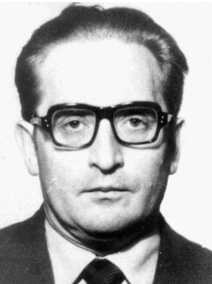
Volodymyr Tonkal, a prominent scientist in the fields of energy, energy saving, and power electronics, and a Corresponding Member of the Academy of Sciences of the Ukrainian SSR, was elected as the first Director of the IESP of the AS UkrSSR.
Following the declaration of Ukraine’s independence, the Institute for Energy Saving Problems of the AS UkrSSR became the Institute for Energy Saving Problems of the National Academy of Sciences of Ukraine (IESP of the NAS of Ukraine).
Among the most significant results of the IESP’s work was the development of the Comprehensive State Program for Energy Saving of Ukraine, which was enacted by Decree No. 148 of the Cabinet of Ministers of Ukraine dated February 5, 1997. The scientific supervisor for the development of this crucial state document was Mykhailo Kulyk, who was then an Academician of the NAS of Ukraine, with the active involvement of leading scientists from the IESP of the NAS of Ukraine.
Following the declaration of Ukraine’s independence, its energy sector faced unprecedented challenges that demanded new approaches and solutions extending far beyond the scope of energy saving alone. Specifically, there arose an urgent need for long-term forecasting of the operation and development of the country’s energy sector and its industries, projecting scientific and technological progress in energy, and researching the management of energy systems and complexes under new economic, political, and international conditions. At that time, a scientific organization capable of comprehensively addressing these issues did not exist in Ukraine—neither within the NAS of Ukraine nor among the state’s sectoral institutes—as during the Soviet era, such problems had been resolved exclusively at the level of the USSR’s central governing bodies.
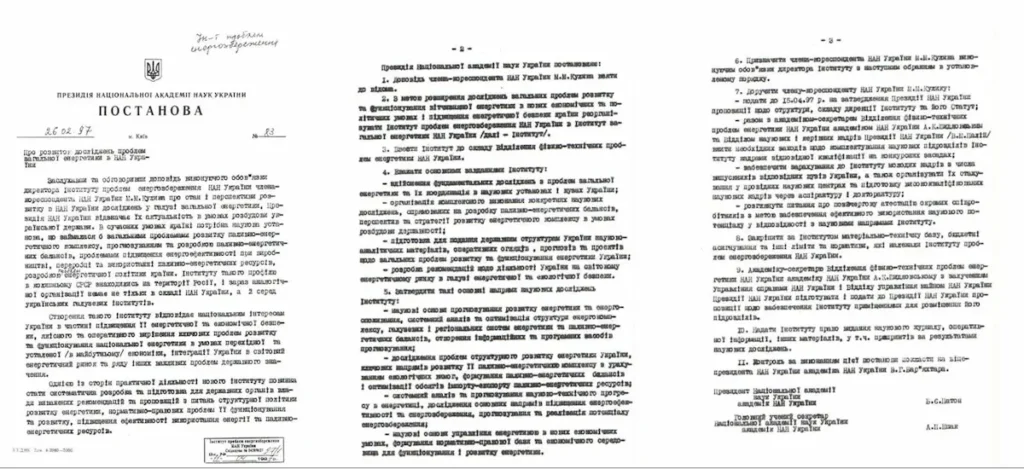
To address the entire scope of these challenges, by Decree No. 83 of the Presidium of the NAS of Ukraine dated February 26, 1997, the IESP of the NAS of Ukraine was reorganized into the Institute of General Energy of the NAS of Ukraine (IGE of the NAS of Ukraine). A vital aspect of the newly established Institute’s practical activities was to be the systematic development of scientifically substantiated recommendations and proposals for state authorities on structural policy for energy development, regulatory and legal issues of its operation and growth, and improving the efficiency of fuel and energy resource utilization.
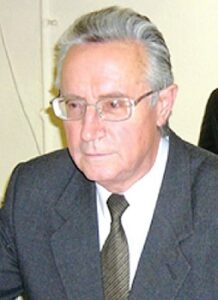
Corresponding Member of the NAS of Ukraine Mykhailo Kulyk (since 2000 – Academician of the NAS of Ukraine) was elected as the Director of the General Energy Institute of the NAS of Ukraine, leading the Institute until March 2022.
Mykhailo Kulyk, a Corresponding Member of the NAS of Ukraine (who became an Academician of the NAS of Ukraine in 2000), was elected Director of the General Energy Institute of the NAS of Ukraine and headed the Institute until March 2022.
Mykhailo Kulyk is a leading scientist, notably in modeling long-term forecasting and optimizing energy sector development within an intersectoral framework. His work focuses on optimizing the development of the national power grid, as well as the oil, gas, and coal industries under the conditions of rational environmental management and national energy security. He developed the theoretical foundations for adaptive systems of automatic frequency and power control in interconnected power systems, synthesized based on passive regulators and large-scale energy storage systems, whose response times are nearly three times faster than traditional systems. Furthermore, he works productively on advancing central input-output models (Wassily Leontief models) to forecast mid- and long-term economic and energy processes at national and global levels, as well as developing integrated models for long-term energy demand forecasting with enhanced accuracy. Under the supervision of Mykhailo Kulyk, more than 20 candidates of sciences (Ph.D. equivalents) have successfully defended their dissertations.
In accordance with Order No. 133 of the Presidium of the NAS of Ukraine dated February 22, 2022, Academician of the NAS of Ukraine Vitalii Babak was appointed Acting Director of the General Energy Institute of the NAS of Ukraine, effective March 1, 2022. He is a prominent scientist both in Ukraine and abroad in the fields of energy and information technologies, particularly in the monitoring, diagnostics, and energy efficiency of power systems. He is one of the founders and the leader of a scientific research school dedicated to creating a new class of diagnostic instruments and systems for energy facilities based on noise diagnostics and heat-flux sensors.
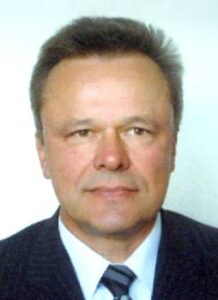
By Decree No. 44 of the Presidium of the NAS of Ukraine dated February 7, 2024, Academician of the NAS of Ukraine Vitalii Babak was appointed to the position of Director of the General Energy Institute of the NAS of Ukraine, effective February 7, 2024.
Throughout its history, the Institute has consistently been at the forefront of domestic science, with its research directly aimed at resolving national strategic issues in the development of the country’s energy sector. The Institute’s leading researchers possess a broad professional outlook that enables them to address energy development challenges by factoring in not only purely technical and technological criteria but also the economic and environmental dimensions of both the energy sector and the national economy as a whole, while fully considering global energy trends. This comprehensive approach allows the Institute to successfully resolve overarching problems of the balanced, long-term development of the energy complex, formulate predictive fuel and energy balances (including within an intersectoral framework), chart pathways for increasing energy efficiency in the production, processing, and utilization of fuel and energy resources, and propose well-substantiated strategies to address specific national energy policy issues and fulfill Ukraine’s environmental obligations.
For many years, the Institute has consistently carried out scientific work on creating and improving methods and tools for researching the development prospects of Ukraine’s energy sectors. At the same time, the growing uncertainty surrounding the future conditions of economic and energy development within any single nation significantly complicates energy forecasting. This uncertainty is driven by the globalization of the world economy, the liberalization of product, commodity, and service markets (particularly energy markets), the internationalization of environmental requirements and constraints, the multiple alternatives for securing investment resources, and the rising impact of energy prices on the pace and direction of economic growth. Consequently, these challenges necessitate the continuous refinement of methods and tools used to conduct relevant research.
To resolve these problems, the Institute’s specialists were the first in Ukraine to develop—and continue to continuously improve—a system of multi-level, interconnected, dynamic simulation and optimization models with stochastic parameters and integer variables. These models ensure the determination of an optimal long-term trajectory for the development of Ukraine’s energy sector and its sectoral systems, taking into full account environmental constraints, national legislative requirements, and Ukraine’s international obligations.
The primary functional blocks of the developed system are:
Utilizing the developed tools, the Institute has carried out a number of projects commissioned by central government authorities. The most significant of these was the draft Energy Strategy of Ukraine for the Period until 2030, which was approved by Decree No. 145 of the Cabinet of Ministers dated March 15, 2006. In developing this document, the General Energy Institute of the NAS of Ukraine served as the lead developer
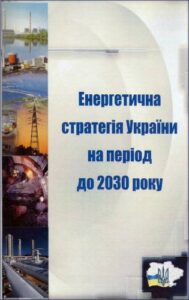
In 2011, the Institute carried out research and development to update the Energy Strategy of Ukraine for the Period until 2030. In 2017, the Institute conducted research and developed conceptual approaches to the development of Ukraine’s energy sector for the period until 2040.
For many years, the Institute has systematically carried out research dedicated to creating methodological and theoretical foundations, methods, and tools for incorporating environmental factors into the study of the operation and development of energy facilities and systems. The Institute’s specialists participated in the development of the “First National Communication of Ukraine on Climate Change.” Commissioned by the Ministry of Environmental Protection of Ukraine, the Institute developed the Greenhouse Gas Emissions Inventory for the energy sector of Ukraine for the period of 1991–1998. Since 2001, the Institute has been a leading scientific organization on issues related to implementing the provisions of the United Nations Framework Convention on Climate Change (UNFCCC), the Kyoto Protocol, and the Paris Agreement in Ukraine. It actively participates in providing expert and analytical support for numerous documents and annually performs an expert evaluation of National Inventories of Anthropogenic Emissions by Sources and Removals by Sinks of Greenhouse Gases in Ukraine.
A key aspect of the Institute’s practical activities is the systematic development and preparation of scientifically substantiated recommendations and proposals for state authorities on structural policies for energy development, regulatory and legal challenges of its operation and growth, and enhancing the efficiency of energy and fuel-and-energy resource utilization.
The research results generated—and continuously updated—by the Institute have been, and currently remain, instrumental in the development of a wide range of critical state documents commissioned by the Administration of the President of Ukraine, committees of the Verkhovna Rada of Ukraine, the Cabinet of Ministers of Ukraine, the National Security and Defense Council of Ukraine, the Ministry of Energy of Ukraine, the Ministry of Environmental Protection and Natural Resources of Ukraine, the Ministry of Economy of Ukraine, the State Agency on Energy Efficiency and Energy Saving of Ukraine, and the Presidium of the National Academy of Sciences of Ukraine.
For instance, commissioned by the State Committee on Energy Efficiency and Energy Saving of Ukraine, the Institute developed the Concept for the State Program on Enhancing the Energy Efficiency of Ukraine’s Economy and Energy Saving (2007), which aimed to resolve the energy efficiency issues of the Ukrainian economy and draw closer attention to tackling the country’s high energy intensity. The development of this program was highly relevant, as the Comprehensive State Energy Saving Program of Ukraine, which was in effect at the time of the Concept’s creation, was set to conclude in 2010. Furthermore, the Institute’s specialists prepared comprehensive materials for the National Report on the Implementation of State Energy Efficiency Policy for 2010–2011 (published in 2012).
Starting in 2000, thematic reports began to be included in the Annual Addresses of the President of Ukraine to the Verkhovna Rada of Ukraine. The content of these reports and the composition of the working groups tasked with their development were determined by relevant orders of the Presidential Administration. In accordance with these orders, the General Energy Institute of the NAS of Ukraine participated in developing the energy-focused thematic reports included in the Presidential Addresses to the Verkhovna Rada of Ukraine for 2000, 2003, and 2005. Specifically, the Institute’s specialists contributed to the preparation of the thematic report “Energy Supply of Ukraine’s Economy and Energy Saving,” which was incorporated into the Address of the President of Ukraine to the Verkhovna Rada of Ukraine “On the Internal and External Situation of Ukraine in 2000.” They also co-authored the thematic report “Energy Markets of Ukraine: Directions for Development and Improvement,” included in the Presidential Address “On the Internal and External Situation of Ukraine in 2003,” as well as a section of the thematic report “Ensuring the Energy Security of Ukraine,” which became part of the Presidential Address “On the Internal and External Situation of Ukraine in 2005.”
In recent years, in response to directives from the highest state governing authorities, the Institute’s scientists have prepared a series of analytical policy briefs focusing on the current state and projected development paths of Ukraine’s energy complex sectors.
At the beginning of 2022, the Institute comprised six scientific departments: the Department of Optimization of the Fuel and Energy Complex Structure; the Department of Energy Efficiency and Energy Consumption Optimization; the Department of Optimization of Fuel Base Development; the Department of Development Forecasting and Operational Management of Power Engineering; the Department of Development Forecasting of Nuclear and Renewable Energy; and the Department of Monitoring and Diagnostics of Energy Facilities, which was transferred to the Institute in January 2022. In October 2022, following personnel changes within the Institute and in view of the adjusted scientific research fields approved by Decree No. 74 of the Presidium of the NAS of Ukraine dated February 23, 2022, the existing six scientific departments were reorganized to form four new scientific departments.
Additionally, the Department of Scientific, Technical, and Organizational Work was established within the Institute, built upon the foundation of the Scientific-Information and Documentary Support Service.
As of January 1, 2023, the Institute employs 97 staff members, including three Academicians of the NAS of Ukraine (M. M. Kulyk, A. A. Khalatov, V. P. Babak), two Corresponding Members of the NAS of Ukraine (O. V. Novoseltsev, N. M. Fialko), 13 Doctors of Sciences, and 35 Candidates of Sciences.
The research results generated by the Institute were utilized by specialists from the National Energy Company “Ukrenergo” in preparing the Generation Adequacy Assessment Reports, which ensure that generating capacities can cover projected electricity demand and maintain the required operational reserves.
A prominent scientific school specializing in the long-term energy-economic forecasting of energy complex development, as well as the systems analysis of energy efficiency and energy saving, has been established and continues to successfully operate at the Institute (founded and scientifically directed by Academician of the NAS of Ukraine M. M. Kulyk). Based on the research generated by this school, the scientific foundations, mathematical tools, models, and methods have been created for the long-term forecasting of the national economy’s fuel and energy resource requirements. This includes the formulation of optimal fuel and energy balances, alongside the optimization of the development of the country’s energy complex as a whole and its sectoral systems (namely the coal industry, electric power, nuclear energy, and oil and gas complexes, as well as heat supply systems), regional energy systems, and unconventional and renewable energy sources.
Additionally, a scientific school specializing in the technical diagnostics of energy systems and information-measuring technologies operates at the Institute (founded and scientifically directed by Academician of the NAS of Ukraine V. P. Babak). Based on the research generated by this school, the scientific foundations, as well as hardware and software tools, have been created for the diagnostics of energy facilities utilizing noise-based diagnostics and heat flux sensors.
The Institute hosts doctoral and postgraduate programs, as well as a Specialized Scientific Council for awarding the Doctor of Sciences degree.
From 1999 to June 2022, the Institute published the collection of scientific papers “Problems of General Energy” (“Problemy Zagalnoi Energetyky”). In 2022, the National Academy of Sciences of Ukraine and the General Energy Institute of the NAS of Ukraine founded the scientific journal “Systems Research in Energy” (“Systemni Doslidzhennya v Energetyci”) on the basis of the former collection. The journal publishes scientific-analytical and research papers by Ukrainian and foreign specialists, presenting research results aimed at solving fundamental and applied problems in the development and operation of the energy complexes of Ukraine and other countries worldwide.
The works of the Institute’s scientists have been honored with the State Prize of Ukraine in the Field of Science and Technology, as well as the NAS of Ukraine Awards named after S. O. Lebediev, V. M. Khrushchov, H. F. Proskura, and V. I. Tolubinskyi.
The Institute is continuously involved in conducting applied scientific research for the Committee for Systems Analysis under the Presidium of the NAS of Ukraine. This research is aimed at solving fundamental challenges in the development of the national socio-economic sphere and ensuring its sustainable growth.
The Institute actively develops international scientific cooperation in the field of systems research in energy. Since 2000, the Institute has consistently carried out joint fundamental and applied scientific research with the International Institute for Applied Systems Analysis (IIASA). In particular, the Institute’s specialists are actively involved in research under the “Advanced Systems Analysis” and “Environmentally Compatible Systems” projects, among others.